
Luba Sculpture, Brancusi, Picasso: Three Modes of Transformation
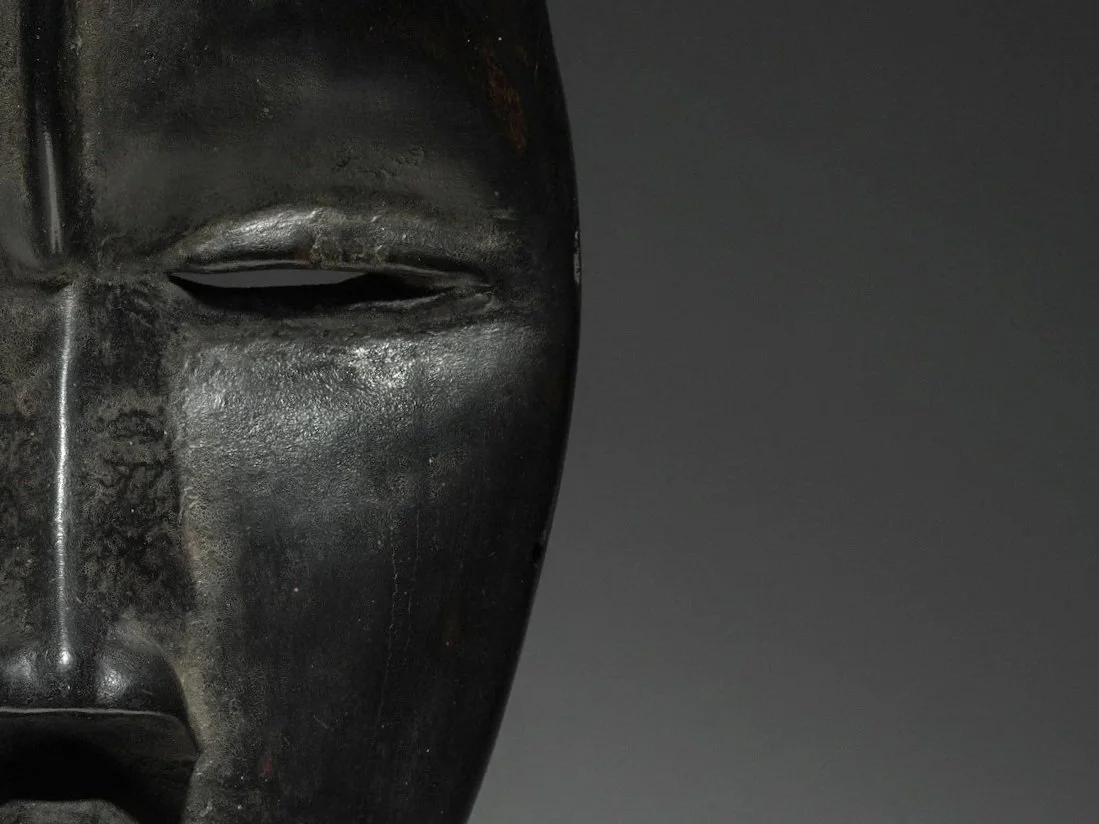
Luba sculpture and the wider corpus of Luba art cannot be separated from its capacity to act in the world, shaping political authority, spiritual life and social cohesion. These objects are not “art” in the conventional museum sense; they operate within networks of spirit, human, and material agency. Where Picasso drew on African art, including Luba sculpture, for its disruptive energy, Brancusi responded to its inner stillness and metaphysical dimension. Viewed together, three distinct modes of transformation emerge: Luba works transform reality itself through ritual efficacy; Picasso transforms visual language, stripping conventions to serve an avant-garde renewal of form; Brancusi distills spiritual essence, filtering African precedents through a metaphysical lens in a personal quest for spiritual universals.
Understanding these modes requires first an appreciation of Luba art within its traditional context. Most traditional artforms from the continent are arts of action, carrying the capacity to preserve stability or effect change depending on their use. Across Luba history, from origin through contemporary practice, the arts operate as agents of social, political, and spiritual transformation. Luba sculptures often display a complementary relationship between their external form and the spirit-directed powers they embody. In the Luba worldview, objects are never inert but charged nodes in a network of forces, rooted in a cosmology where objects are integral to the community’s spiritual and political life.
Sculpture, in the Luba imagination, is never inert, it is a charged node in a network of forces.
When we think of Luba art today, we think of works created by people living along the Lualaba River and around the lakes of the Upemba Depression, or among related peoples to the east of this heartland in what is now the DRC. Many Luba sculptures in museum collections date to the nineteenth or early twentieth centuries when Europeans first visited these remote parts of central Africa, but a few works may date to the eighteenth century or even earlier. Luba peoples constitute a bouquet of overlapping clan and lineage groupings that were consolidated as kingdoms and important chiefdoms from around the seventeenth century, as they are to some extent today. Luba royal histories reveal both the centrality of art for political reasons and its importance for ritual purposes. Visual, verbal, musical, and mnemonic arts supported the formation of polities, affirmed legitimacy, mediated diplomacy, and served as instruments of spiritual intervention. The efficacy of these objects, rooted in human, material and spiritual networks, was inseparable from their aesthetic form. In their roles as historical documents, objects of legitimacy and diplomacy, spiritual receptacles and divinatory instruments, Luba arts have intervened in both subtle and empathic ways to shape public consciousness and individual purpose. In order to understand how objects perform such dynamic roles, Luba aesthetics must be considered.
The efficacy of Luba objects, as directed by the agency of spirits and operating within complex networks of material, human and spiritual confluences, can lead to social transformation and is the essence of political power. Aesthetics is rarely associated with efficacy in Western art discourse and practice: museum displays still showcase African objects either as art or as artifact, as though the two are conceptually distant. As Christopher Pinney writes “Images whose power is evaluated in terms of efficacy are difficult to understand from the viewpoint of conventional aesthetics.” Human agency is not ascribed to the majority of transformations effected by objects of their cultural heritage. A number of recent studies examine the efficacy of objects based upon the explanations of believers, devotees and cultural spokespersons. In his work on the “lives” of Indian sculptures, Richard Davis introduces the concept of self-manifestation, through which a god takes initiative to inhabit an image. In all of these contexts, icons and sculptures act as thresholds between divinity and the human world.
The masquerade kept evil at bay during moments of dire social transition and celebrated the hope associated with the rising of a new moon. – Mary Nooter Roberts
A Luba emblem, whether a staff, a stool, a bowl figure or a Lukasa cannot take an arbitrary form but rather must be ordered and fashioned to reflect the idea that power is based on prohibitions, interdictions, rules and regulations. For Luba, the work of art is the work of spirits. It is the responsibility of humans to ensure that spirits find desirable and appropriate homes. When the spirits do come to reside there, they enable and effect transformation. A chief’s stool is is a bridge between the living ruler and the ancestral order. A lukasa board is an active field where fingers trace history into being, a tactile conduit connecting past and present, human and spirit. Form and function, matter and meaning, beauty and efficacy are inseparable. Sculpture transforms not in the metaphorical sense but as a matter of lived reality: it is an agent in the ongoing negotiation between the visible and invisible, the living and the dead, the now and the ancestral, sanctifying rules, protecting, calling forth the immaterial into the tangible. Mbudye adepts for example have played important roles in recent civil wars, helping to resist rebel incursions. Their magical bundles (often held in Antilope horns), abilities to transform themselves into dangerous animals and aggressive spirits called nzunzi that inhabit certain carved wooden figures and can be empowered to attack an enemy, have been seen as the “atomic bomb” as Nooter Roberts describes, by local villagers and soldiers alike, who fear these sources of mystical power. One Luba mask is so famous, that it is the signature object of the Royal Museum for Central Africa. Its dignified repose and chignons suggesting buffalo horns may evoke Mbidi Kiluwe and the mask could have dramatised the Luba Epic for buffalo masks created by the eastern Luba and Tabwa are believed to have been used in just such cosmic cycles.
The significance of these art objects operates on both visible and invisible, spirit-directed levels. Transformation is often attributed not to human makers or users but to the spirits inhabiting the objects. People create and use art, but in turn, art - through its spiritual potency - also creates and uses people, shaping their identities and social roles. The creative and transformative power of art resides in its spiritual inhabitants, not in human craftsmanship or artistic genius. This is where efficacy and aesthetics are combined: an object’s beauty and form are inseparable from its ability to act in the world and for the sake of this discussion, potential to carry the transformation of spirit matter into physical reality.
In Brancusi’s sculpture, the “primitive” and folkloric encountered a quintessentially modernist reduction of form. - Robert Hughes
Romanian sculptor Constantin Brancusi aand his concern with images of idealised nature represent a parallel interest in sculpture’s capacity to convey an inner order, though with different intent. His work abstracts natural forms—birds, eggs, torsos—into timeless, self-contained shapes. Surface, unity, and the logic of the block become conduits for a spiritual or metaphysical clarity. His work celebrated the otherness of sculpture, its ability to appear self-contained and perfect, while still displaying (as metaphor) those principles of growth and structure which underlie real natural form. If the Expressionist project meant saturating the non-human world with ego, Brancusi’s was to endow its forms – suitably abstracted – with something of the clarity and finality of law, seeking the essence underlying form, privileging material as a vessel of inherent meaning. “No other modern sculptor, not even Henry Moore, addressed himself quite so undeviatingly to how one cuts, rather than one summons one’s attention to the invisible core of the block” Robert Hughes writes in Shock of the New, quoting the artist: “What is real is not the external form, but the essence of things…it is impossible for anyone to express anything essentially real by imitating its exterior surface.”
Brancusi approached sculpture as the creation of timeless, self-contained forms that distilled the essence of nature into pure, harmonious shapes. His focus on the surface, the unity of form and the inherent meaning of material itself set him apart from Expressionist subjectivity. By rejecting the “spirit versus matter conflict” – a relic of Judeo-Christian belief in a moral conflict between the world and the spirit - through his conviction that matter itself can by itself be as full of meaning as anything it might be made to represent, Brancusi’s treatment of sculpture endowed it with a sense of immutability and universality, by learning from Rodin about the importance of the sculptural skin as an expressive envelope resulting in polished, meticulous strone and bronze curves. Where constructivist sculpture is made up of parts, of strain, balance and asymmetry, Brancusi produces form that is unitary, that cannot be taken apart, an ideal whole. Hughes writes “One is reminded of the medieval argument for the immortality of the soul, since the soul is not composed of parts, it cannot be separated into parts and thus cannot undergo dissolution.”
Immutable and seemingly resistant to analysis but also to time and its contingencies as the most fundamental of natural forms, Brancusi’s sculptural practice was centered around spiritual distillation through the reduction of form to archetypal lines without descriptive excess. Without directly quoting African motifs, Brancusi did in a way translate the inner logic of such objects into his own visual language with his abstractions echoing the principle of form as a container for immaterial potency. Bancusi’s sculptures therefore also sought to open a channel to something beyond the material, not reproducing the communal and ritual integration of Luba but engaging with its baseline philosophical premise of form as a vehicle or container for the immaterial via modernist mysticism.
The African carvings were an exploitable resource, like copper or palm-oil, and Picasso’s use of them was a kind of cultural plunder.
A different mode of transformation of sculpture can be seen in Picasso’s interest in African artworks, as he used their pictorial languge as a source of formal innovation that could break the exhausted conventions of Western figuration. Extracting its visual distortions and rhythms, stripped of their original meanings and recharging them with his own aggressive modernist energy - an act that was steeped in the colonial attitudes of his time – Picasso was stating what no eighteenth-century artist would have ever imagined suggesting. He made the case that the tradition of the human figure, which had been the very spine of Western art for two and a half millenia, had at last run out and that in order to renew its vitality, one had to look to untapped cultural resources.
In Picasso’s modernism, African sculpture (which may very well have included Luba works though often not specifically identified at the time) shocks the Western tradition out of its stagnation by introducing new formal freedoms and energies, devoid of any spiritual associations however. Through the appropriation of forms and motifs from the continent, Picasso brought to its climax a long interest which nineteenth-century France had shown in the exotic, the distant and the “primitive”. Hughes writes:
The French colonial empire has given the images of Berber, lion-hunt and Riff warrior to the imagery of Romanticism, through Delacroix and his fellow romantics. By 1900, technology in the form of the gunboat and the trading steamer had created another French empire in equatorial Africa, whose cultural artefacts were ritual carvings, to which the French assigned no importance whatsoever as art. They thought of them as curiosities, and as such they were an insignificant part of the flood of raw material France was siphoning from Africa. (…) Cubism was like a dainty parody of the imperial model. The African carvings were an exploitable resource, like copper or palm-oil, and Picasso’s use of them was a kind of cultural plunder.
In line with this, Picasso saw sculpture from the continent as a resource to be mined for new forms, taking much interest in the visual and formal, the potential of the radical grammar or abstraction, distortion and expressive simplification and very little in the ritual purposes or cultural meanings of the objects. If one compares a work like Picasso’s Les Demoiselles d’Avignon with its African source material, the differences are as striking as its similarities. What Picasso cared about was the formal vitality of African art, which was for him inseparably involved with its apparent freedom to distort. It seemed violent and offered itself as a receptacle for his own panache. So the work of Picasso’s so-called “Negro Period” has none of the aloofness or the reserved containment of its African prototype; its lashing rhythms remind us that Picasso looked to his masks as emblems of savagery, of violence transferred into the sphere of culture, creating a means of transformation that was first and foremost art historical, stripping the objects of their spiritual contexts but leaning heavily on their function as a visual strategy for modernist disruption.
To follow this trajectory is to witness the slippery, protean life of art: how it moves across continents, centuries, and cultures, carrying traces of its origin even as it accrues the desires, anxieties, and aspirations of those who encounter it.
Picasso’s encounter with African sculpture was not so much an anthropological engagement as it was a moment of rupture in his own visual vocabulary. In Picasso’s hands, these forms were severed from their communal and spiritual moorings and recast as formal provocations: a geometric audacity, a distortion of the human, a liberation from the tyranny of perspective and Renaissance naturalism. Brancusi’s encounter was of a different order. Rather than an iconoclast seeking to break painting’s frame, his gaze was that of a mystic in pursuit of essence. The concision of an African figure - its compressed planes, its refusal of surface ornamentation - resonated with his own belief that the true form of a thing lies beneath its accidental features, evidence of an eternal sculptural logic: the idea that the reduction of form can bring us closer to the infinite. Yet this, too, was a translation or perhaps a transfiguration of meaning, where particular cosmologies and communal functions were subsumed into a universalist metaphysics.
Across these migrations, reshaping modernism, the sculptural object from the continent becomes in Picasso’s hands a formal detonator, in Brancusi’s vision a spiritual cipher, each stage preserving something of the original. The throughline is a belief in the transformative capacity of sculpture, as each iteration locates it in a different realm: The world/reality (Luba), The art world/artistic language (Picasso), The inner world/conciousness(Brancusi). They are, in a way, three stages of dislocation: from deeply embedded spiritual function, to radical aesthetic repurposing, to modernist metaphysical reimagining. The key difference lies in what is being transformed and how meaning is preserved or stripped away. The point of tension is that Luba tradition is embedded and efficacious; Picasso’s is appropriative and disruptive; Brancusi’s is appropriative yet reverential, seeking kinship with the metaphysical impulse but outside its cultural ground. The throughline is therefore also a meditation on the migration of meaning across cultures and how it may mutate and facture in transit. To follow this trajectory is to witness the slippery, protean life of art: how it carries traces of its origin even as it accrues the desires, anxieties and aspirations of those who encounter it. Form, in its own eloquence, has the ability to transform on this trajectory that meaning is neither fixed nor infinitely fluid. Some meanings fracture under the weight of dislocation, others crystallise into new forms, alien to the source but alive in their own right.
(1) Mary Nooter Roberts, Allen F. Roberts, Visions of Africa: Luba, (5 Continents Editions, 2007).
(2) Robert Hughes, The Shock of the New, (Alfred A Knopf, 1991).