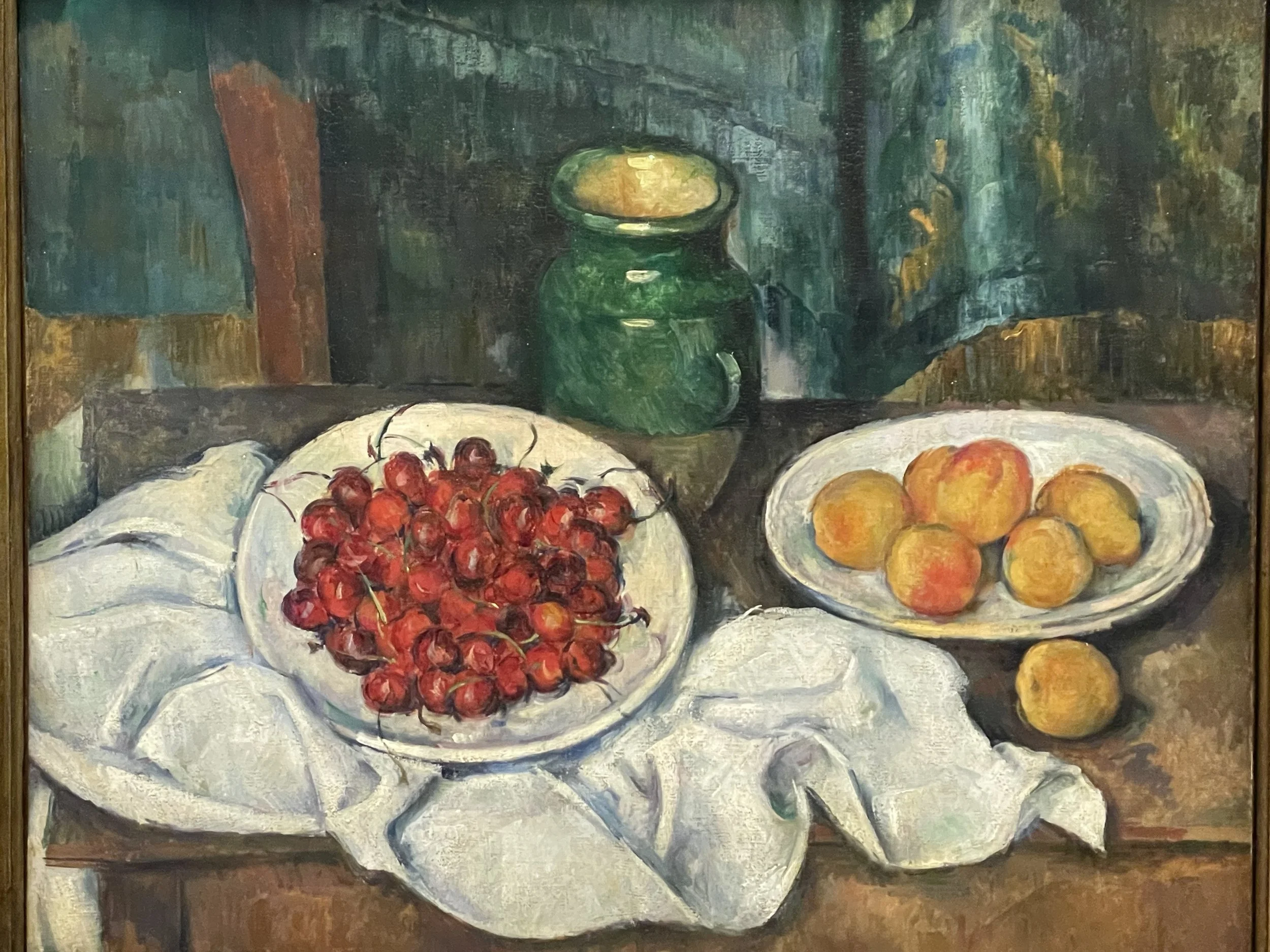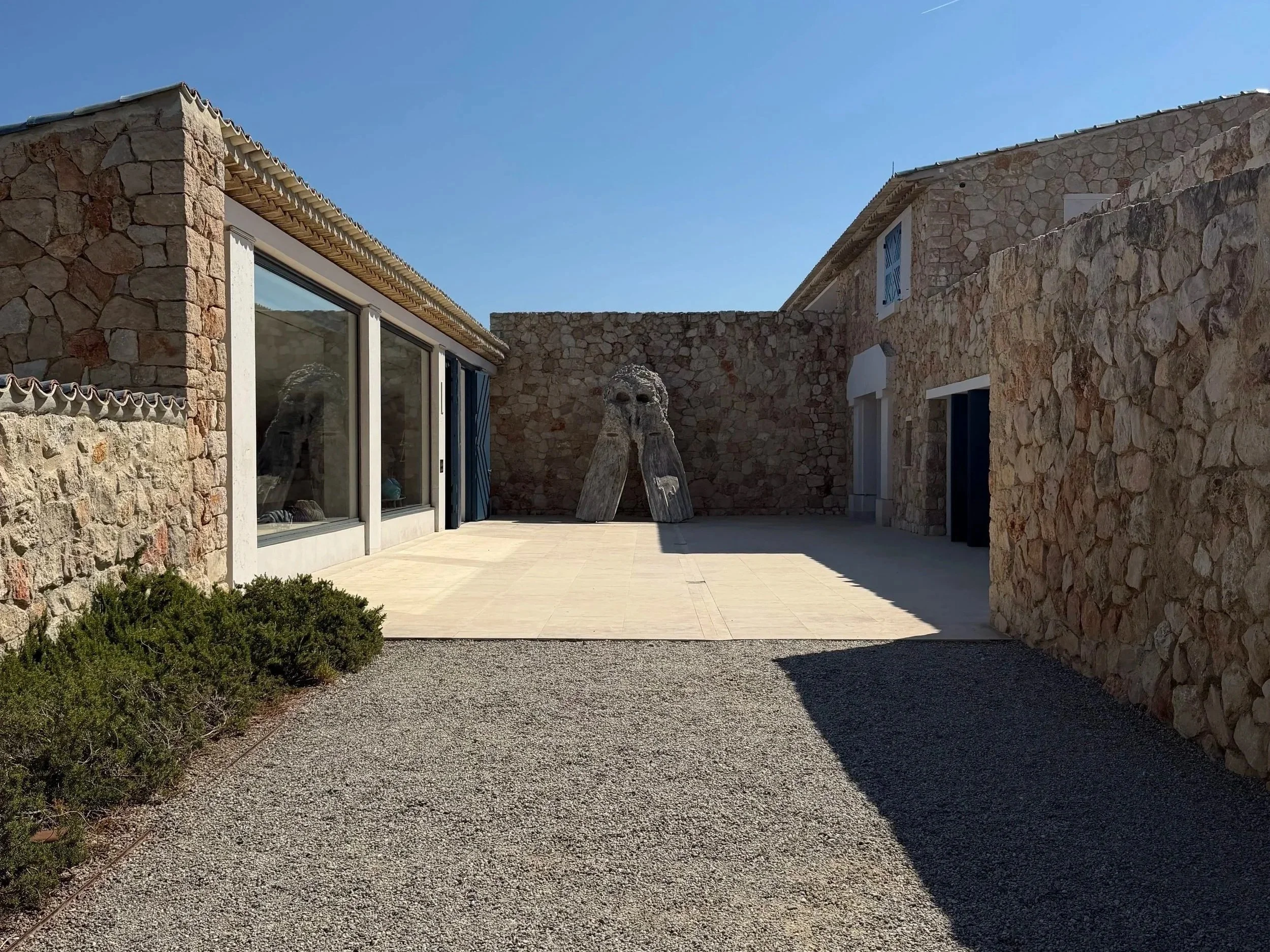
Fondation Carmignac, Porquerolles
Officially, summer's winding down, but the South of France tends to stretch it by a month or two. Henceforth, here’s a spiritual sequel to my summer art destinations list, this time devoted entirely to the South of France and a recommendation for any time of year. The only reason MAMAC in Nice is not on this list but merely an honourable mention is due to its current closure - because it houses some of the most exquisite works by Yves Klein. The South of France has been inseparable from modern art since the 19th century, when Cézanne, Renoir, Matisse, Picasso, Braque and others were drawn south by the light and the landscape and you can still trace it in a dense cluster of museums, private foundations, former studios and collections scattered along the coast and inland. Here's the route.
Marseille, Hyères & Porquerolles
Marseille: probably not the most obvious starting point for an art itinerary, but incredibly easy to get to for everyone, so that's where we started, as a larger group travelling in from different countries. The one visit worth making is Le Corbusier's Cité Radieuse, completed in 1952 and part of UNESCO's listing of his architectural work. From Marseille, we headed east to Hyères. If you take the ferry from Hyères La Tour Fondue to the Île de Porquerolles, it's about a fifteen-minute walk from the port to the Fondation Carmignac. Founded by financier Édouard Carmignac, the space is built into a converted farmhouse with underground galleries lit by a water ceiling. Warhol, Lichtenstein and Basquiat are among the holdings. Outside, there's a large sculpture garden by Louis Benech, with the works scattered through the landscape rather than arranged as a conventional park. It's a beautiful space, warm, Mediterranean, sun-filled and makes perfect sense on the island.
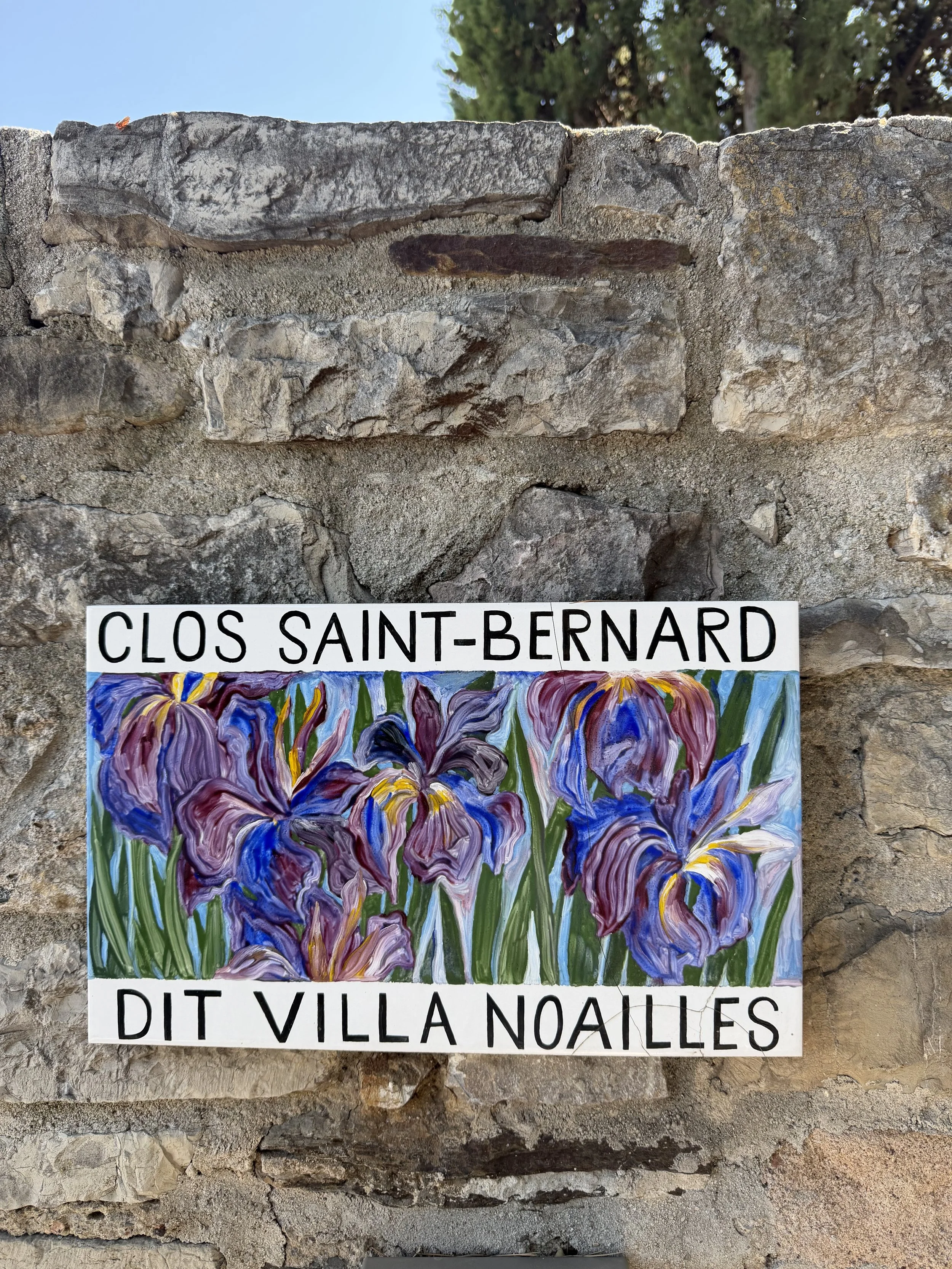
Just outside the gates of Villa Noailles
While in Hyères, you might as well take in both La Banque, musée des Cultures et du Paysage and Villa Noailles. La Banque is within the former Banque de France building in town. It's a small museum with a surprisingly broad collection, spanning fine art, archaeology, ethnography and natural history, with a focus on the Hyères landscape, presenting a Calder show at the moment. Villa Noailles is a little further uphill and perfect for anyone enthusiastic about modernist architecture. The residence was built for Charles and Marie-Laure de Noailles by Robert Mallet-Stevens starting in 1923 and kept expanding through the decade with terraces, gardens, a pool and a gymnasium. The Noailles were serious patrons of the avant-garde: Picasso, Man Ray, Cocteau, Dalí and Buñuel were part of their circle and the house itself involved Eileen Gray, Pierre Chareau, Theo van Doesburg and Giacometti. Man Ray shot Les Mystères du Château de Dé there in 1929. It's now a contemporary art centre showcasing architecture, design, fashion and photography, with a lovely little garden cafe. Rest assured, I' will always mention whether there's a good garden cafe or restaurant somewhere.
Le Muy & Saint-Paul-de-Vence
On the drive to our next stop Saint-Paul-de-Vence, Le Muy was somewhat conveniently located. The Venet Foundation is built around an old mill, a country house and a smaller house extended with a modern addition. It is located in Le Muy (of all places) because Bernar Venet felt it was the most sensible choice of place when it came to producing and shipping his large-scale works - made in the same wonderfully matter of fact way also seen in his overall approach to his creation. His own pieces sit alongside those of artists who've influenced or intersected with his practice: Frank Stella, James Turrell, Donald Judd, Sol LeWitt and Carl Andre among others all appear in the grounds, plus a temporary exhibition space that showed Dan Flavin when we visited. The foundation is only accessible by guided tour, offered several days a week that runs two hours. Mandatory guided tours can feel like a jarring, confining way to see a place, but this is one of the few instances that I deeply appreciated.
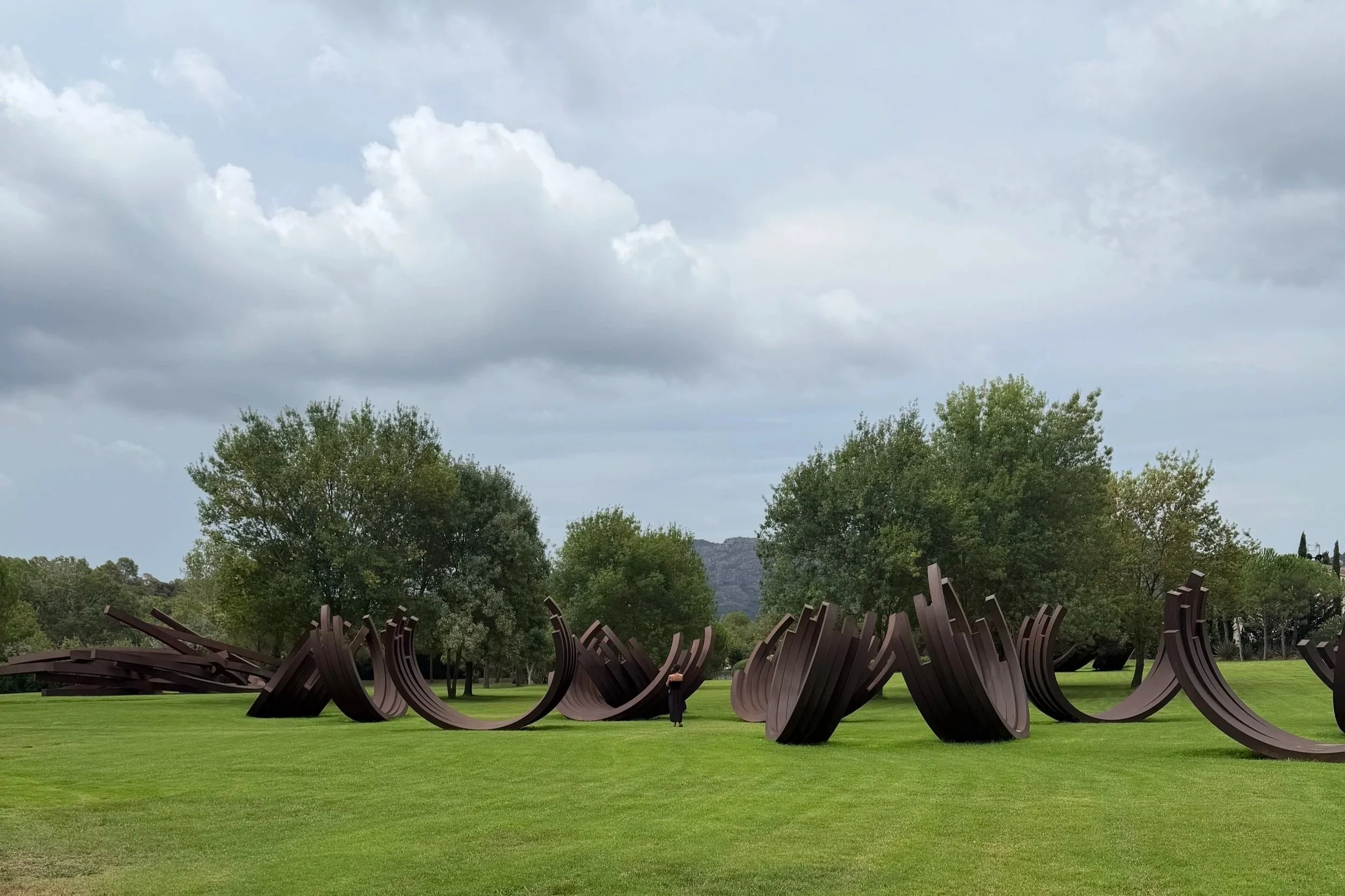
Venet Foundation
Once we arrived in Saint-Paul-de-Vence, we stayed at Fondation CAB, a 1950s building renovated by Charles Zana, showcasing Hubert Bonnet's collection plus temporary shows, focused on Minimalist and Conceptual art. Alongside the exhibition space there's a four-room guesthouse integrated into the property and a small restaurant. The rooms are curated very lovingly, furnished with 20th-century design pieces by the likes of Prouvé, Perriand, Jeanneret, Kjærholm and Aalto and works by selected contemporary artists throughout. There's even a 1944 Prouvé Maison Démontable that's been converted into a room.
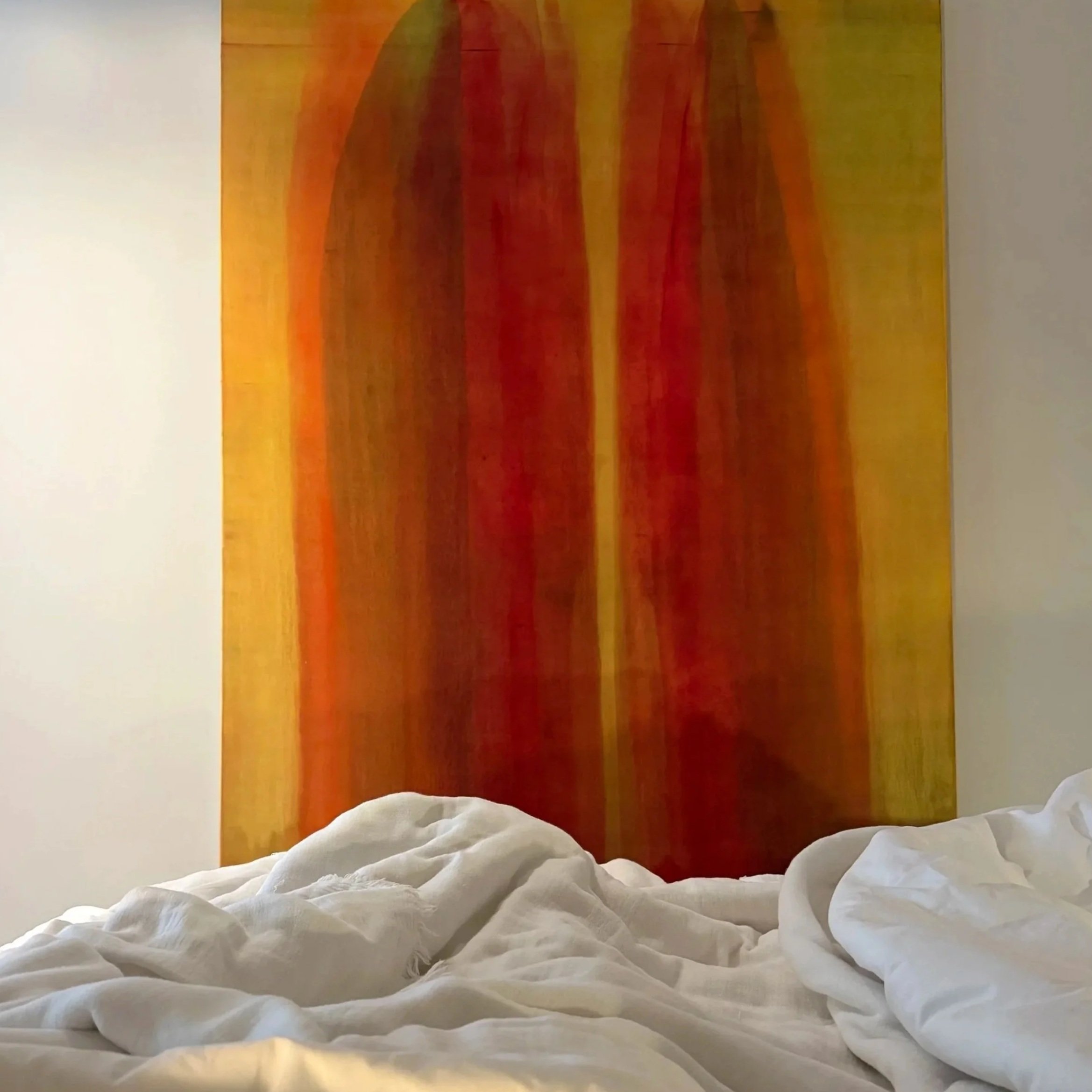
Julien Saudubray in Room #2 at Fondation CAB
Much more importantly - and in truly German fashion - I must mention the excellent location: a two minute walk into the village (genuinely two minutes and not five, because we all know five minutes is never specific enough and almost always a lie) and right across from the Fondation Maeght, the main event for good reason. It was founded by Aimé and Marguerite Maeght and inaugurated in 1964 by André Malraux. Braque encouraged them to build it after the death of their son, and Miró introduced them to the architect Josep Lluís Sert. The building was designed together with the artists themselves: Giacometti's courtyard, Miró's labyrinth, Braque's pool and stained glass, Chagall's mosaic. The collection and the architecture are hard to separate as a result. A 2024 extension by Silvio d'Ascia added 580 square metres of gallery space, mostly underground and deliberately kept invisible from outside.
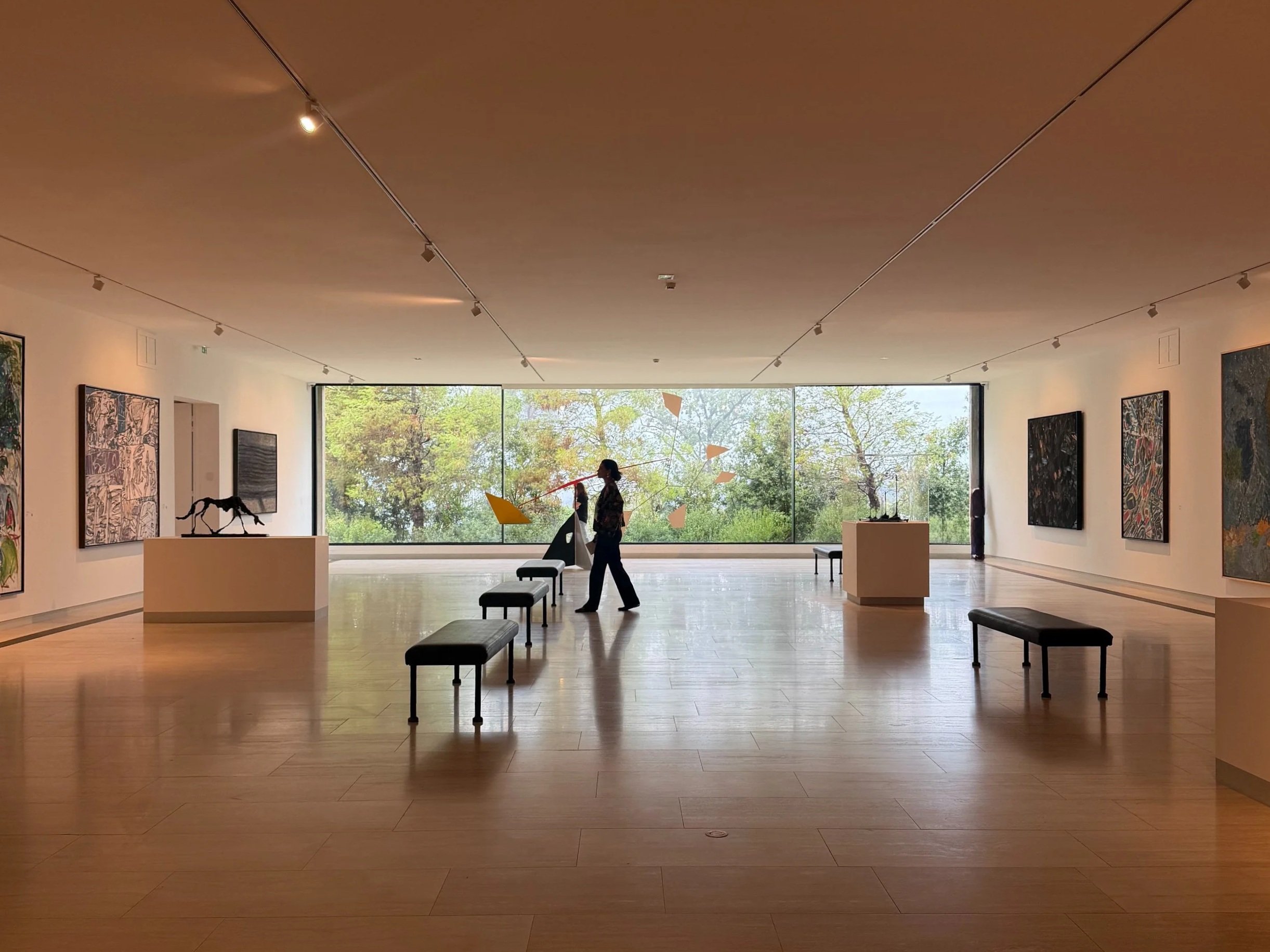
Fondation Maeght
In the village itself, we had to stop at La Colombe d'Or for lunch. While not the most original spot to recommend, the space itself (maybe not the food) is truly special. The legendary hotel houses pieces by the usual suspects such as Picasso, Braque, Matisse, Arman, Léger and César, many of which used to eat and stay there. The Calder sculpture by the pool has been photographed to death, but it just sits there so beautifully. I get it. And once you're in Saint-Paul-de-Vence, you might as well drive up the hill to Vence, to see the Chapelle du Rosaire: Matisse designed the entire environment (architecture, stained glass, ceramics, vestments, furnishings) between 1948 and 1951 and who doesn’t love a good stained glass window.
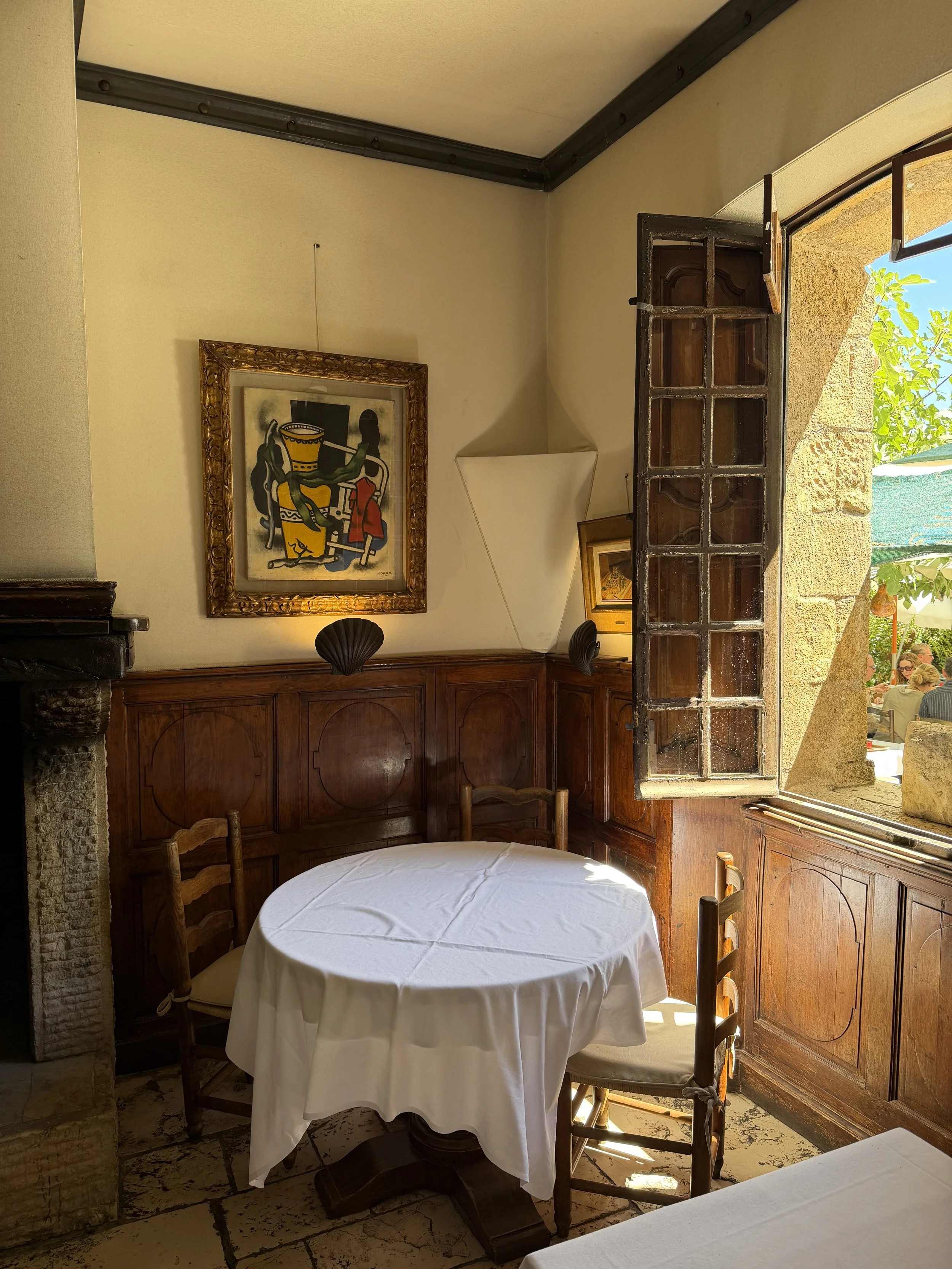
La Colombe d’Or
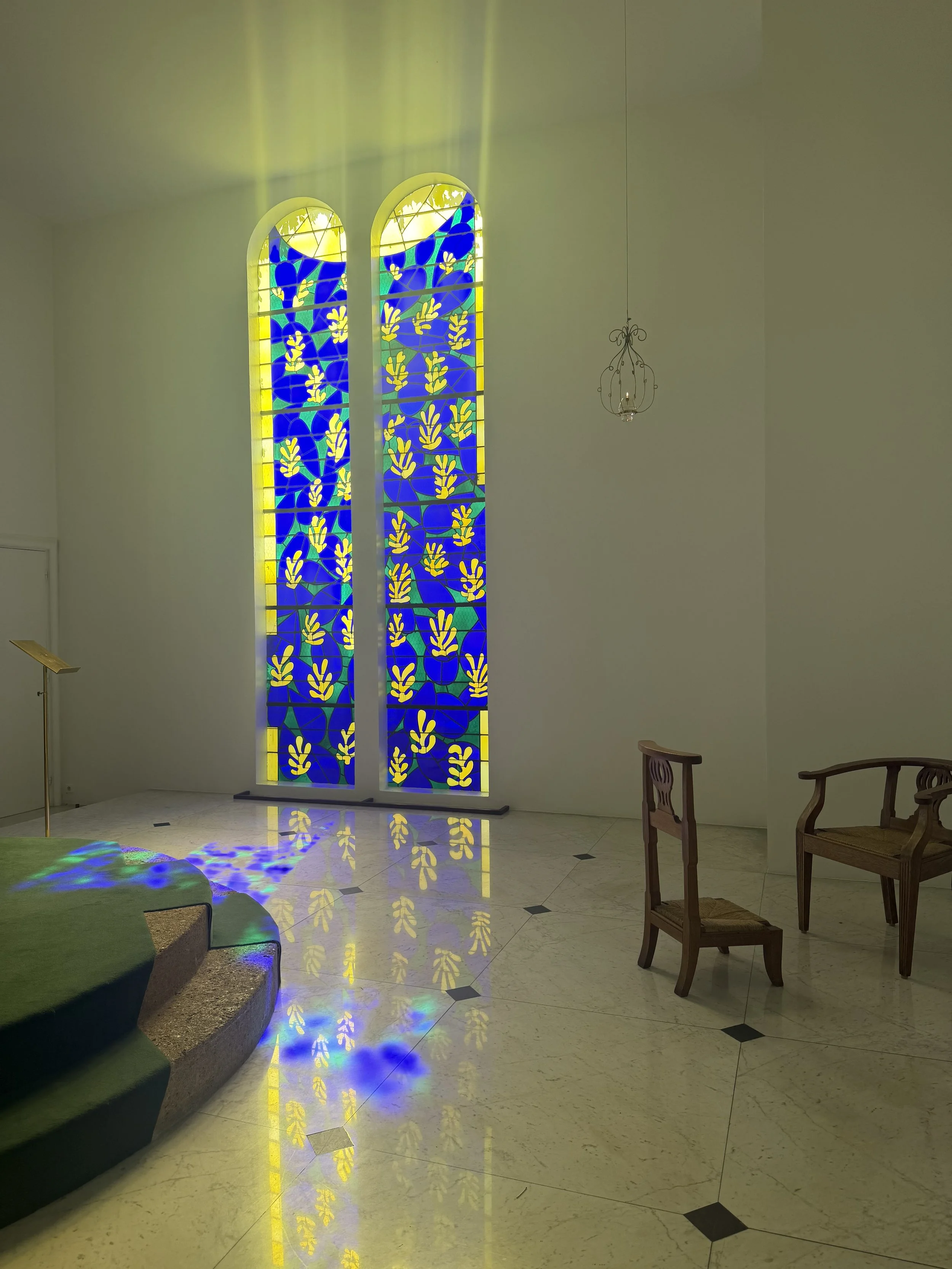
Chapelle de Rosaire, Vence
Leaving the area, we spent some time at what might be one of the more underrated spaces on the coast: Musée national Fernand Léger in Biot. It opened in 1960 on the former Mas Saint-André and became a national museum after a donation to the French state in 1969. The museum gives a good overview of Léger's artistic trajectory, from his Cubist beginnings through to the more colourful, exuberant work of his later career. The building itself, designed by André Svetchine, has a huge mosaic on its façade, based on an unrealised Léger project for a stadium in Hanover and a garden by Henri Fisch.
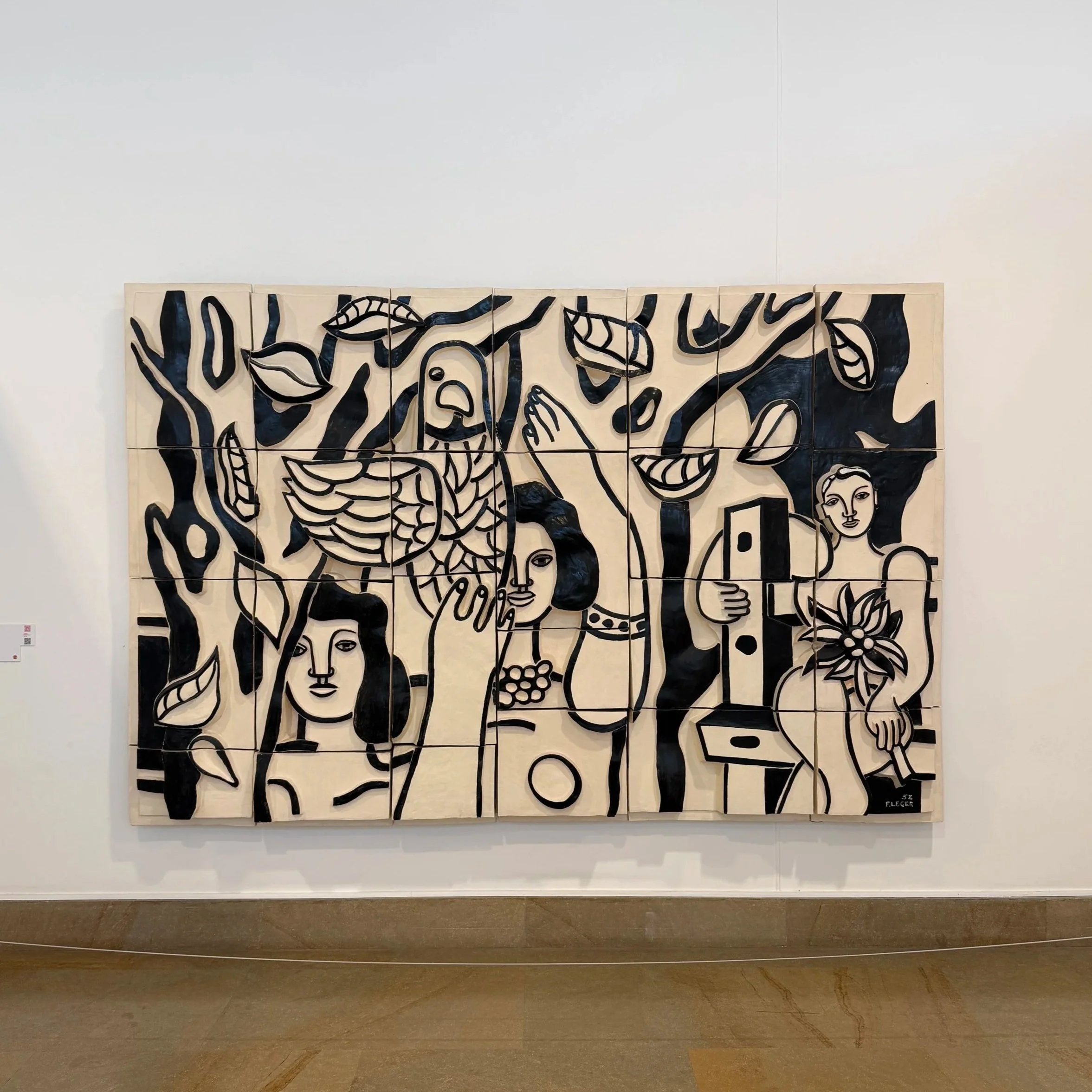
Musée national Fernand Léger
Rodez
This is probably the most unhinged part of the tour as it requires some serious dedication. Rodez isn't really on the way to anything and getting there is a pilgrimage in its own right. Some people go to Mecca, some people do the Camino. We drove to Rodez. In my case, said dedication stems from having worked for Karsten Greve, who for many decades has been not just a close friend of Pierre Soulages but also represented his work for an equally significant period of time. Being that close to his work during the years I spent there, it felt almost blasphemous not to go.
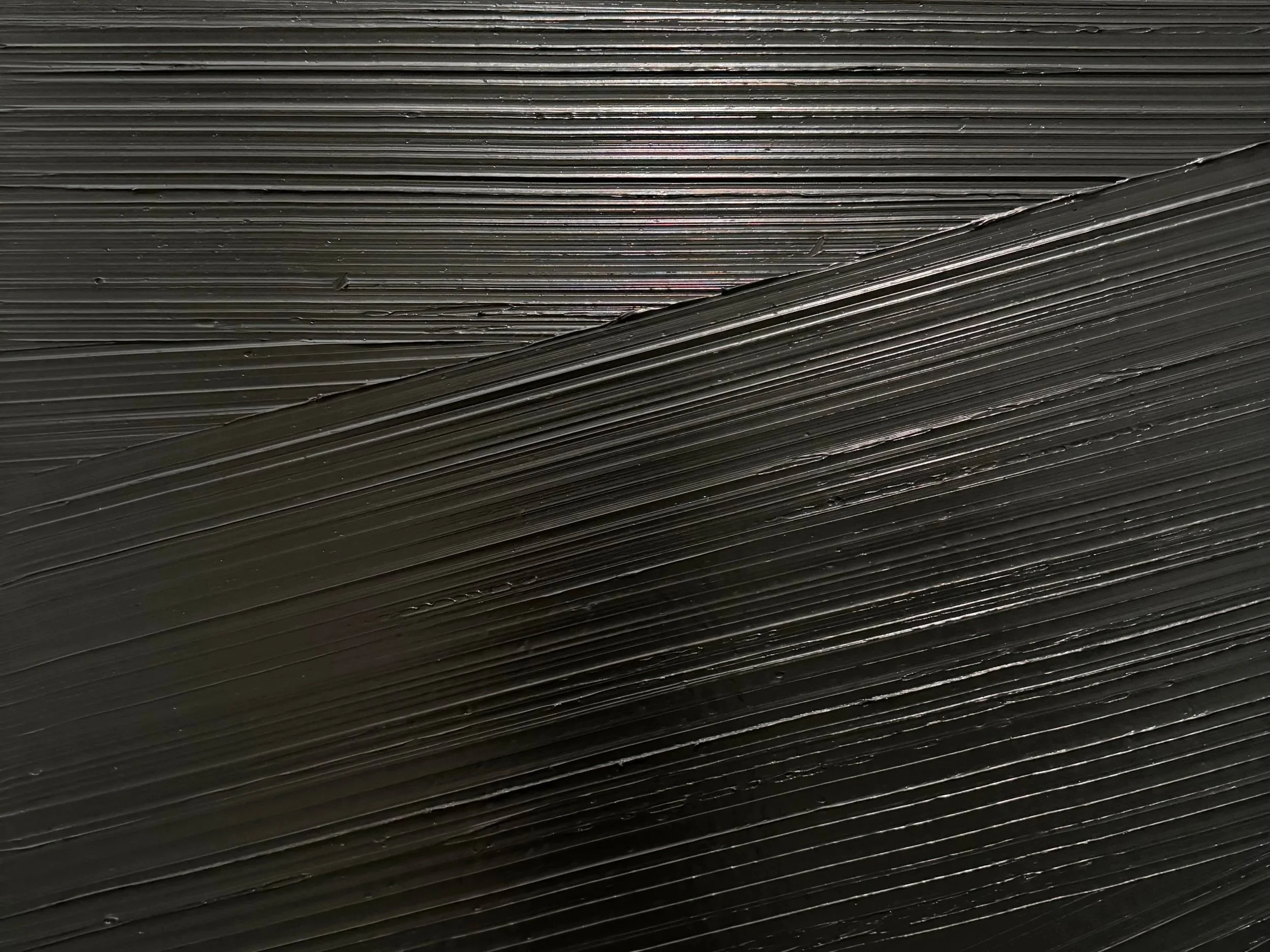
Soulages was born in Rodez in 1919 and he and his wife Colette donated a large group of works to the city, forming the basis of the museum, which opened in 2014. The building is made up of four Corten-steel volumes that look like they're emerging from the landscape. Soulages spent his career investigating black as a surface that generates light rather than absorbs it. Naturally, the museum's galleries are built around controlling sunlight and artificial light in its interaction with the paintings' surfaces. Alongside Soulages’ work, the museum features smaller temporary exhibitions by other artists as well.
Arles & Aix-en-provence
On the way back to Marseille, we passed through Arles and Aix-en-Provence, with several stops worth making in each. LUMA Arles is Maja Hoffmann's cultural campus at the Parc des Ateliers, anchored by Frank Gehry's tower. It functions less like a museum and more like a constantly shifting mix of exhibitions, installations, performances and research. The Lee Ufan Museum also in Arles is one of my favourites in the region. It occupies the Hôtel Vernon, which Lee Ufan converted into an exhibition space together with Tadao Ando, open to the public in 2022. Ando's architecture sits alongside the building’s history, creating a genuine sense of repose and space to contemplate Ufan's restrained and meditative compositions. Not far is the newly opened Fonds Bustamante, in the restored 12th-century Église Sainte-Croix. It presents Jean-Marc Bustamante's own work and archive alongside temporary shows and a lecture programme.
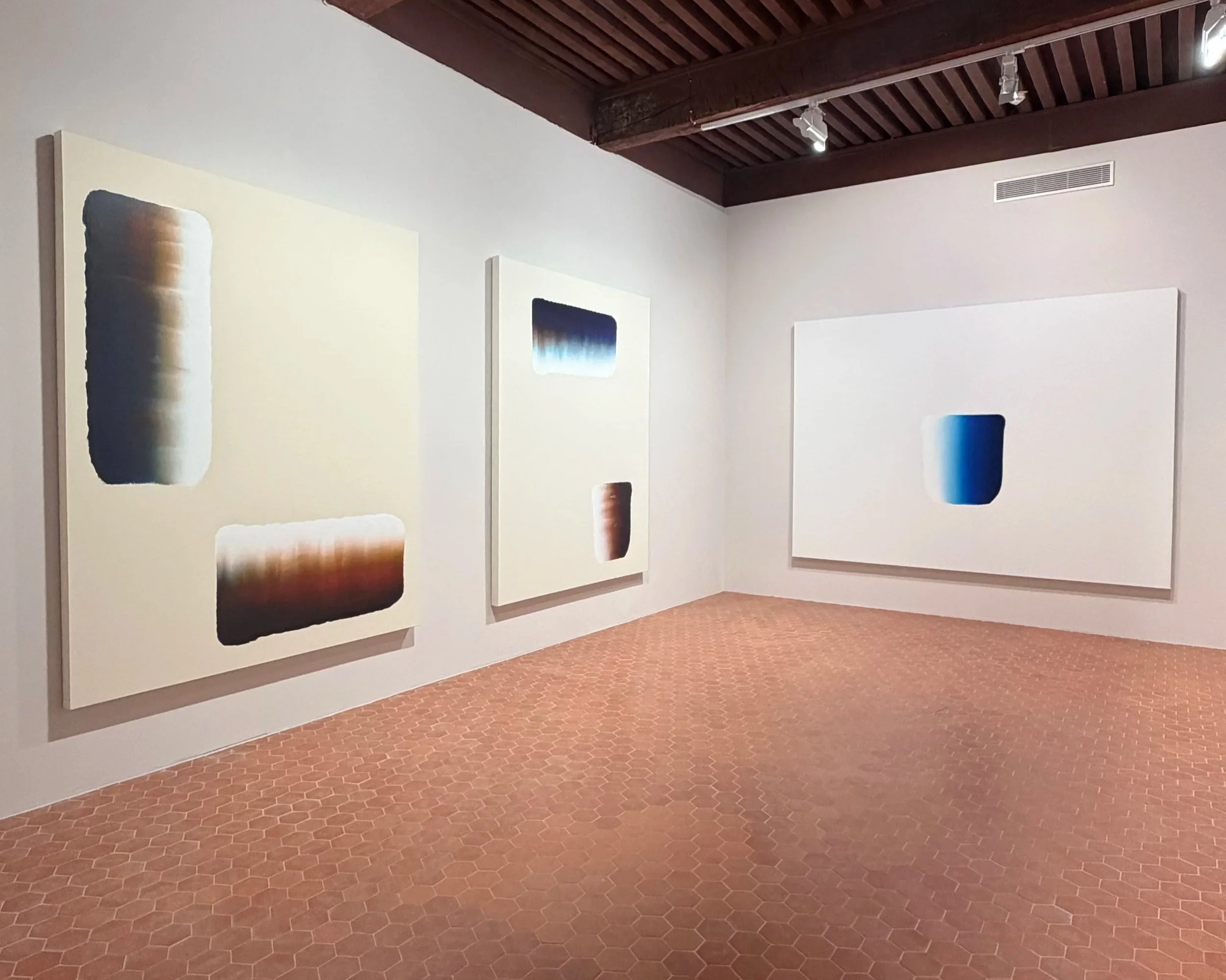
Lee Ufan
From Arles, we continued toward Aix, stopping at Château La Coste: a winery, art estate and architecture park spread across several hundred hectares, acquired by the Irish collector Patrick McKillen in 2002. A central structure by Tadao Ando and buildings by Renzo Piano, Frank Gehry, Richard Rogers, Oscar Niemeyer and Kengo Kuma are scattered through the grounds, alongside sculptures by Louise Bourgeois, Calder, Richard Serra, Ai Weiwei, Yoko Ono, Lee Ufan and Tracey Emin. Give it most of a day. The works are spread through vineyards and woods rather than arranged as a conventional sculpture park.
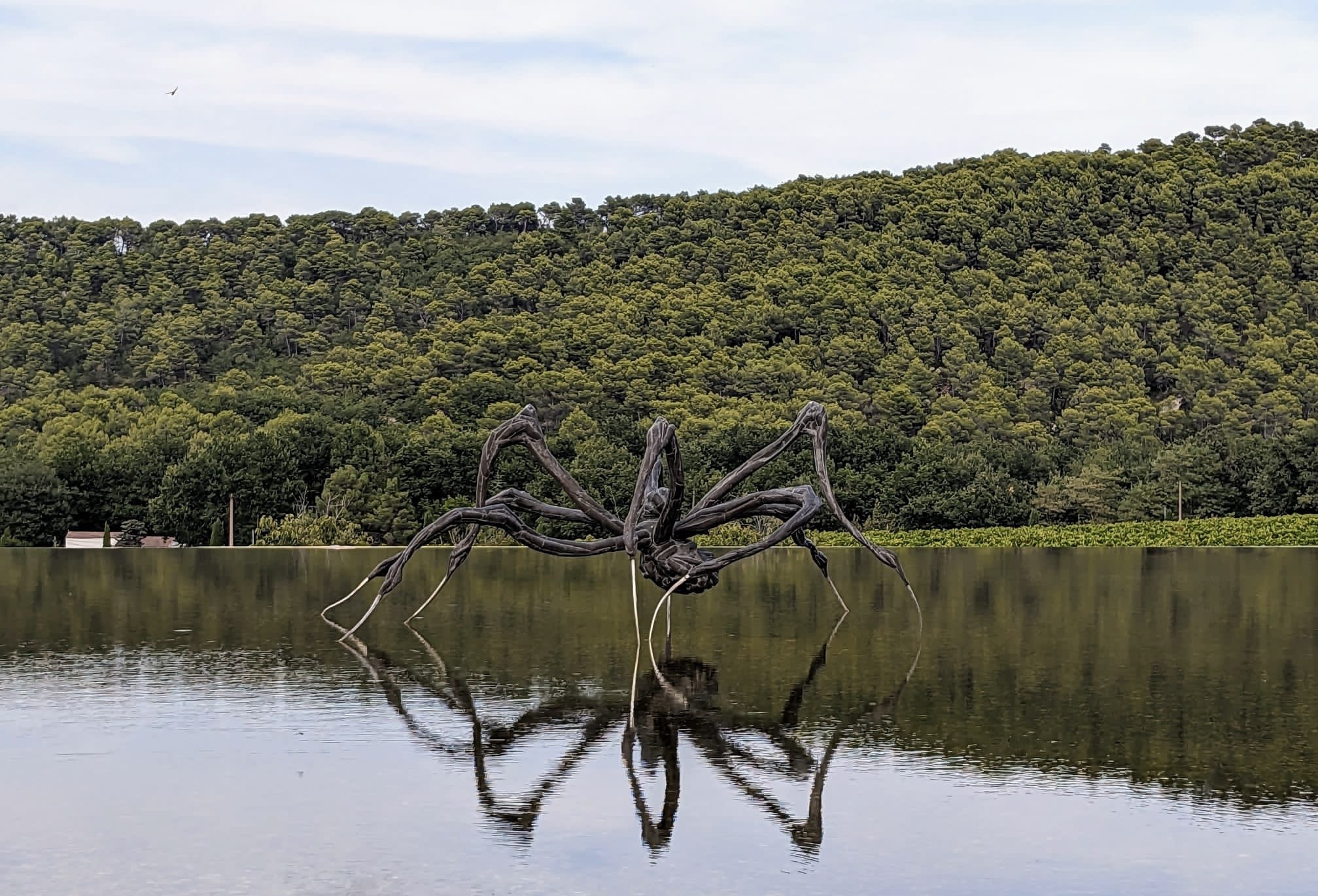
Château La Coste
The Musée Granet in Aix-en-Provence showcases the history of art in Provence rather comprehensively and not just focusing on more famous protagonists the famous names, though Cézanne is well represented. A Philippe Meyer donation added Degas, Bonnard, Vuillard, Picasso, Mondrian, Klee and de Staël while the Granet XXe site holds the Jean Planque collection. Gallifet, right outside the Musée Granet, is a contemporary art centre in an 18th-century townhouse. Whether you’re inclined to check out what’s inside or not, it’s worth stopping for lunch in the garden restaurant either way. Again, I will never not mention a lovely garden café or restaurant. The Fondation Vasarely on the way out of Aix is Vasarely's own Gesamtkunstwerk, opened in 1976 and built around geometric modules and optical effects at a monumental scale. The building has been through periods of neglect, but it's currently being restored and is another honourable mention that needs to be included.